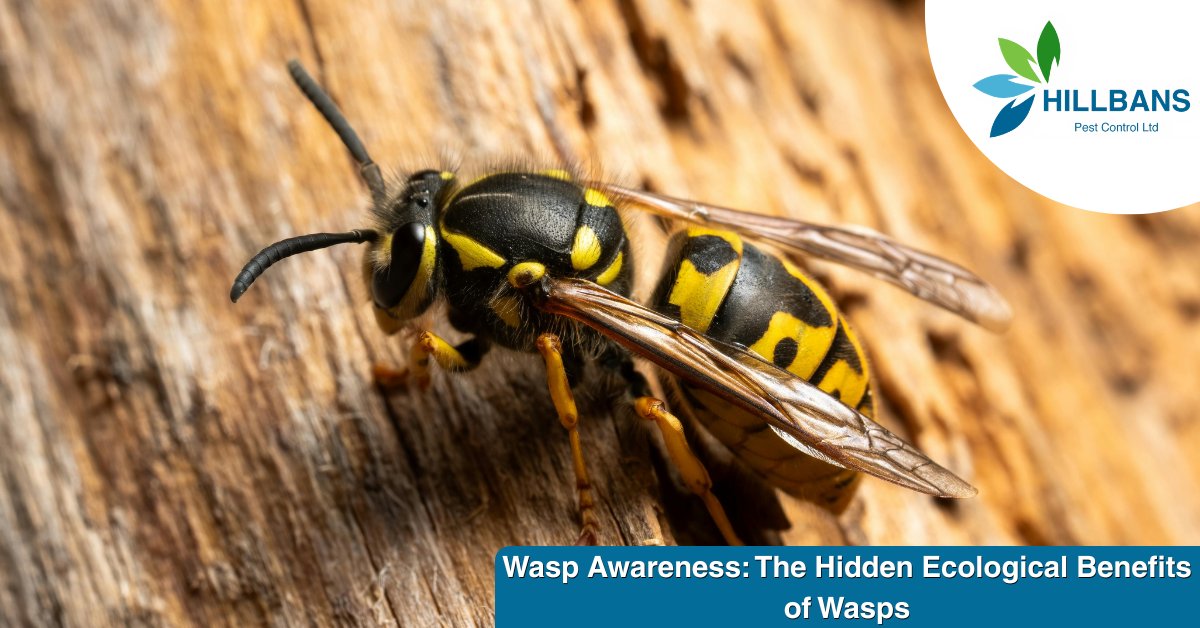
Wasp Awareness: The Hidden Ecological Benefits of Wasps. For many people across the Isle of Wight and beyond, wasps are often viewed as nothing more than aggressive garden pests.
One of the most common statements heard by pest control technicians every summer is:
“Wasps have no ecological benefits — they’re only here to sting.”
At Hillbans Pest Control, we believe this is one of the biggest misconceptions surrounding one of Britain’s most misunderstood insects. While wasps can become a nuisance in certain situations, they also play a vital role within our ecosystems, helping to maintain natural balance through pollination and pest control.
Wasps are often viewed negatively because of their defensive behaviour later in the summer, but for most of the year they are actually highly beneficial insects.
Much like bees, wasps contribute to the pollination of flowers, trees, and crops throughout the British Isles. Unlike Bees, Wasps are also responsible for keeping numbers of invasive insect species low, indigenous and non-native alike. This behaviour is rooted into their life cycles and elevates them to be given the name of natural pest controllers.
They actively hunt and feed on insects such as:
This behaviour helps naturally regulate insect populations, including invasive and non-native species, making wasps an essential part of maintaining ecological balance.
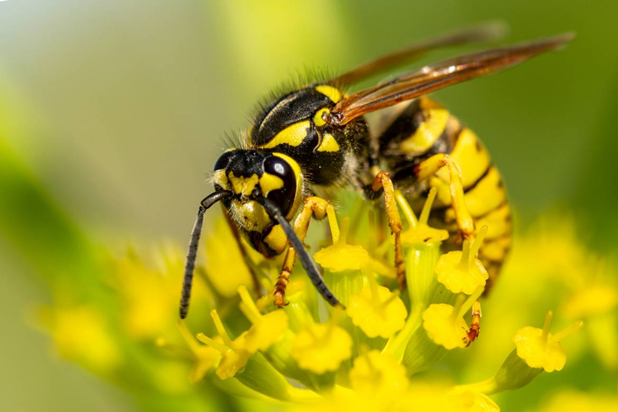
During spring and summer, wasps spend most of their time collecting food for their colonies rather than interacting with humans.
Research and ecological observation have increasingly shown how important wasps are to local food chains and seasonal pollination. For example, ivy plants often attract large numbers of foraging wasps later in the year, assisting pollination and helping produce berries that support bird populations through winter and spring.
Wasps themselves also form part of wider food chains, becoming a food source for birds and other wildlife.
Early in the year, numbers are low. Queens are busy building nests to start the colony for the season.
However, towards the end of the season, wasp behaviour begins to change.
As new queens leave the nest, workers can be found gorging themselves on fermenting fruit. This is where problems accrue at a higher percentage. This causes them to seek alternative sugar sources from the surrounding environment.
This is why wasps are commonly seen around:
At this point in the season, nests can contain thousands of individuals, with mature colonies sometimes exceeding 10,000 wasps.
This is also when human and wasp interactions increase significantly, often leading to concerns regarding stings, allergies, and public safety.
At Hillbans, we take a responsible and environmentally aware approach to wasp control.
Unless there is an immediate danger to people or pets, nests are often best left undisturbed during the early part of the season. Wasps are usually focused on supporting their colony and play a valuable ecological role during this time.
However, treatment may become necessary when:
Every nest is different, and treatment options depend on factors such as nest size, location, accessibility, and level of activity.
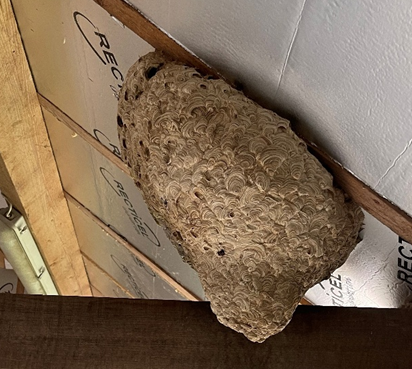
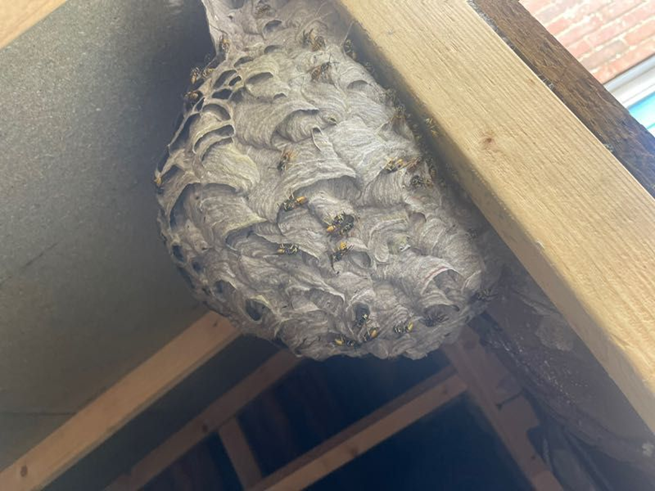
If you are concerned about wasp activity or believe you may have a nest on your property, professional advice is always recommended.
Hillbans Pest Control provides safe, professional, and environmentally conscious wasp nest treatments across the Isle of Wight.
Contact Hillbans Pest Control today!
📞 01983 406999
📧 info@hillbanspestcontrol.co.uk
