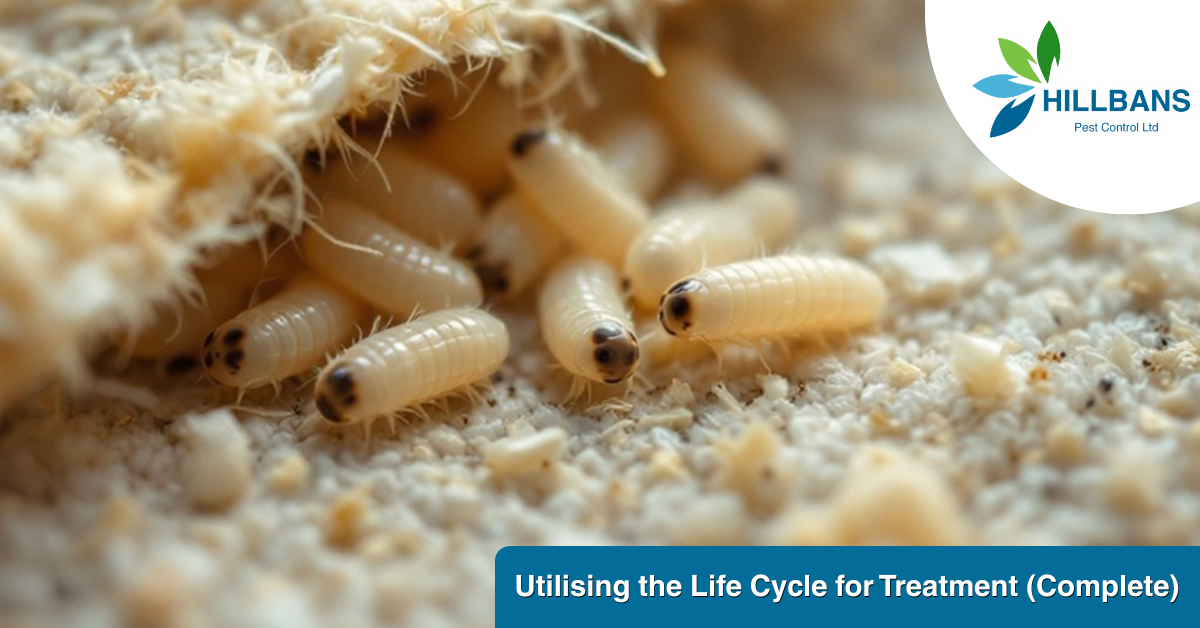
As we move into Spring, a time when insect activity begins to increase it is important to understand the role that insect life cycles play in effective pest control. At Hillbans, we recognise that successful treatment is not simply about applying products, but about targeting pests at the right time in their development to achieve the best possible outcomes.
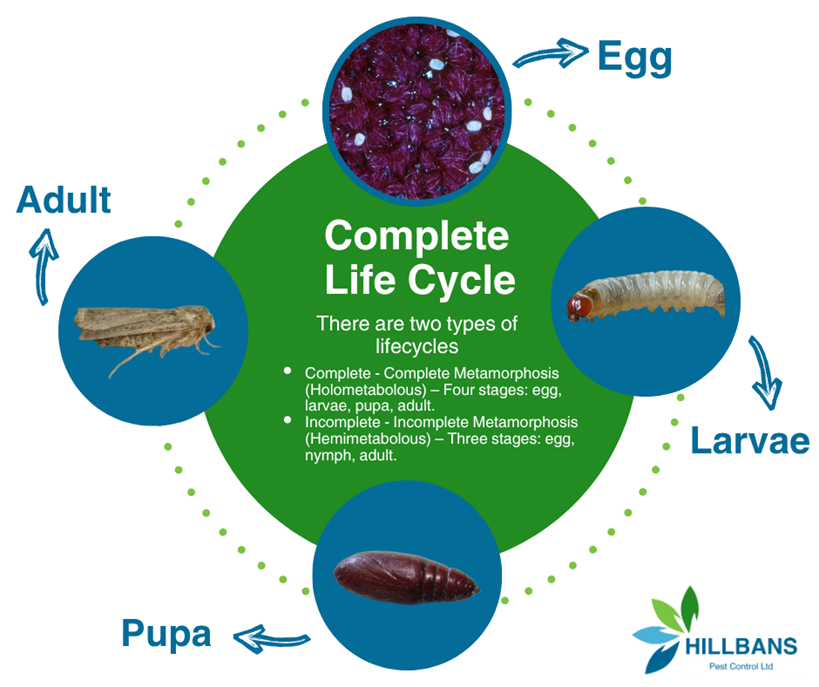
This month, our focus is on insects, and this blog is about the life cycle and how they can be utilised to enhance pest control strategies. We will explore complete metamorphosis, the four-stage development process of egg – larvae – pupa – adult, and why each stage is significant when planning treatment.
We will also outline information regarding various categories of pests that undergo complete metamorphosis, and the role of pesticide and insecticide usage in controlling infestations effectively and responsibly.
One of the first formal theories related to the origin of insect metamorphosis was presented by William Harvey in 1651. He proposed that the insect egg contains so scarce nutrients that the embryo is forced to hatch before completing development. Then, during the larval life, the animal would accumulate enough resources to reach the pupal stage, which Harvey considered as the perfect egg (Belles, 2011).
How Each Life Stage Behaves and Impacts Treatment
While complete metamorphosis describes the transformation from egg to adult, each stage behaves very differently. This has a direct impact on how and when pest control treatments should be.
This is typically the most effective stage to target with insecticides, as larvae are more exposed and susceptible.
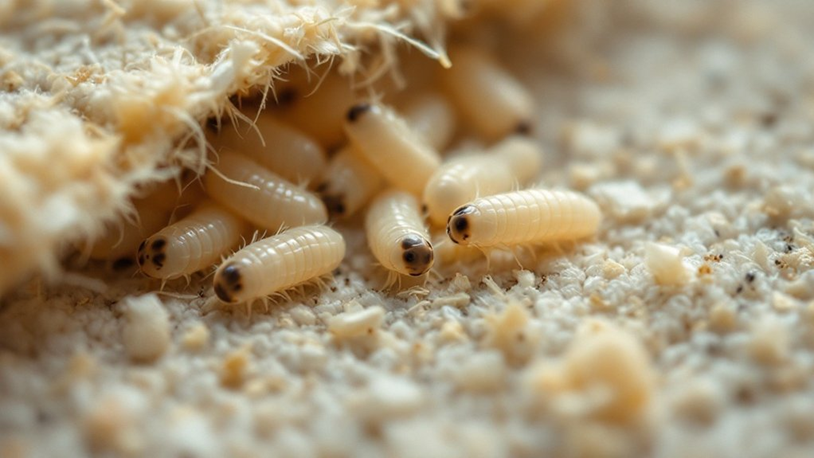
Many of the most common and problematic pest species encountered in the UK undergo complete metamorphosis. Understanding the categories they fall into and how their life cycles influence behaviour is essential for applying effective, targeted treatments.
Problematic Store Product Insects
(Abd El-Aziz, 2011)
Flying Insects
Crawling Insects
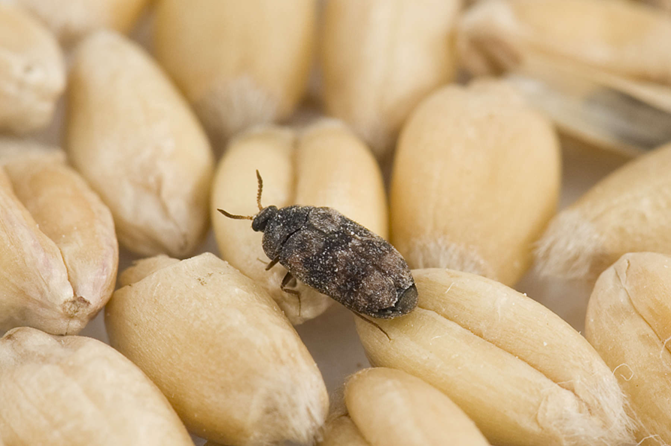
Insecticides have a pivotal role in our lives, not only for crop protection in agriculture, but also to avoid the spreading of harmful pests causing human diseases such as malaria (Lopez et al., 2005). Effective pest control relies not only on selecting the right product, but also on understanding how, when, and where to apply it in relation to the insect’s lifecycle.
Types of Treatments
Contact Insecticides
Residual Insecticides
Insect Growth Regulators
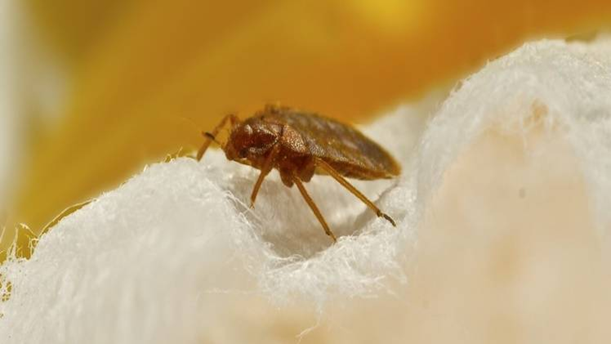
Understanding the insect life cycle is fundamental to achieving effective and long-lasting pest control. As explored throughout this blog, insects that undergo complete metamorphosis progress through four distinct stages – Egg, larva, pupa, and adult each of which behaves differently and responds differently to treatment.
At Hillbans Pest Control Ltd, this lifecycle-based approach underpins all treatment strategies, by combining professional expertise with a thorough understanding of pest behaviour, promoting effective, responsible, and sustainable pest control solutions.
If you would like any further information regarding this blog post or anything else pest control, please contact us today!
📞 01983 406999
📩 info@hillbanspestcontrol.co.uk
References
Belles, X. (2011). Origin and Evolution of Insect Metamorphosis. ELS. https://doi.org/10.1002/9780470015902.a0022854
López, Ó., Fernández-Bolaños, J. G., & Gil, M. V. (2005). New trends in pest control: the search for greener insecticides. Green Chemistry, 7(6), 431. https://doi.org/10.1039/b500733j
Abd El-Aziz, S. E. (2011). Control strategies of stored product pests. J. Entomol, 8(2), 101-122.
