Spider Season in September: What’s In Your Home & Why. Every September, without fail, the same thing happens across the Isle of Wight. The evenings cool. The nights draw in. And homeowners start to notice often with a sharp yelp from the living room that the spiders are back, and they’ve got noticeably bigger. This isn’t your imagination. The autumn spike in indoor spider activity is one of the most predictable events in the pest control calendar and it triggers thousands of Google searches every week from anxious homeowners wondering whether what they’ve just seen is dangerous, why there seem to be so many of them, and what they can do about it.
This guide covers the four spider species you’re most likely to see in an Isle of Wight home in September, explains why they suddenly appear in such numbers, addresses the false widow question honestly, and sets out when a spider problem is worth calling us about and when it isn’t.
It’s a widely believed myth that spiders come inside in autumn to escape the cold. In reality, the spiders you see marching across your living room carpet in September have almost certainly lived in your home their entire lives. They’ve just spent the previous eleven months hidden in cracks, corners, cavities and quiet rooms where you didn’t see them.
What actually happens in September is this: male spiders reach sexual maturity in late summer, leave their usual hiding spots, and go looking for females. This is why the enormous spider you see is almost always seen moving running across the floor, sprinting up a wall, or trapped in the bath. Female spiders tend to stay put in their webs and are much less visible. The dramatic “there’s a huge one!” experience is a male spider on a mating mission.
Three additional factors add to the September effect:
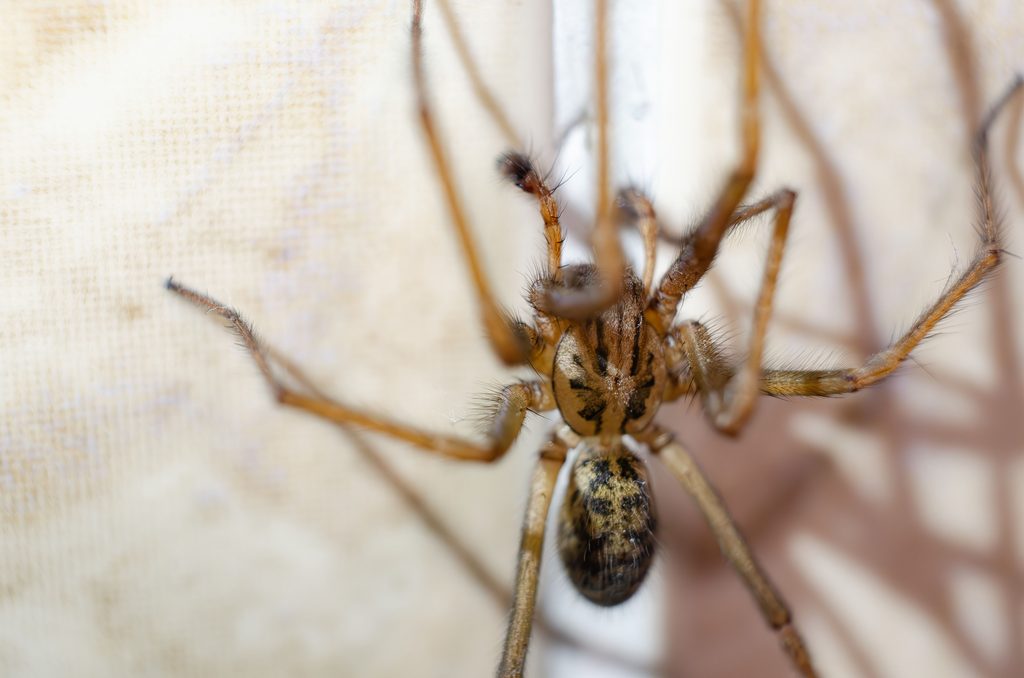
The big, fast, brown-grey one that always sprints across the floor and is usually the culprit behind the dramatic September screams. Body length up to 20mm; leg span up to 75mm. Long, hairy, muscular legs. Very fast and one of the fastest spiders in Europe.
Builds messy funnel-shaped webs in dark corners, behind furniture, in garden sheds and under bath edges. Prefers dry, undisturbed spaces. Not aggressive, extremely reluctant to bite and even if it did the bite is comparable to a mild nettle sting. This is the September spider.
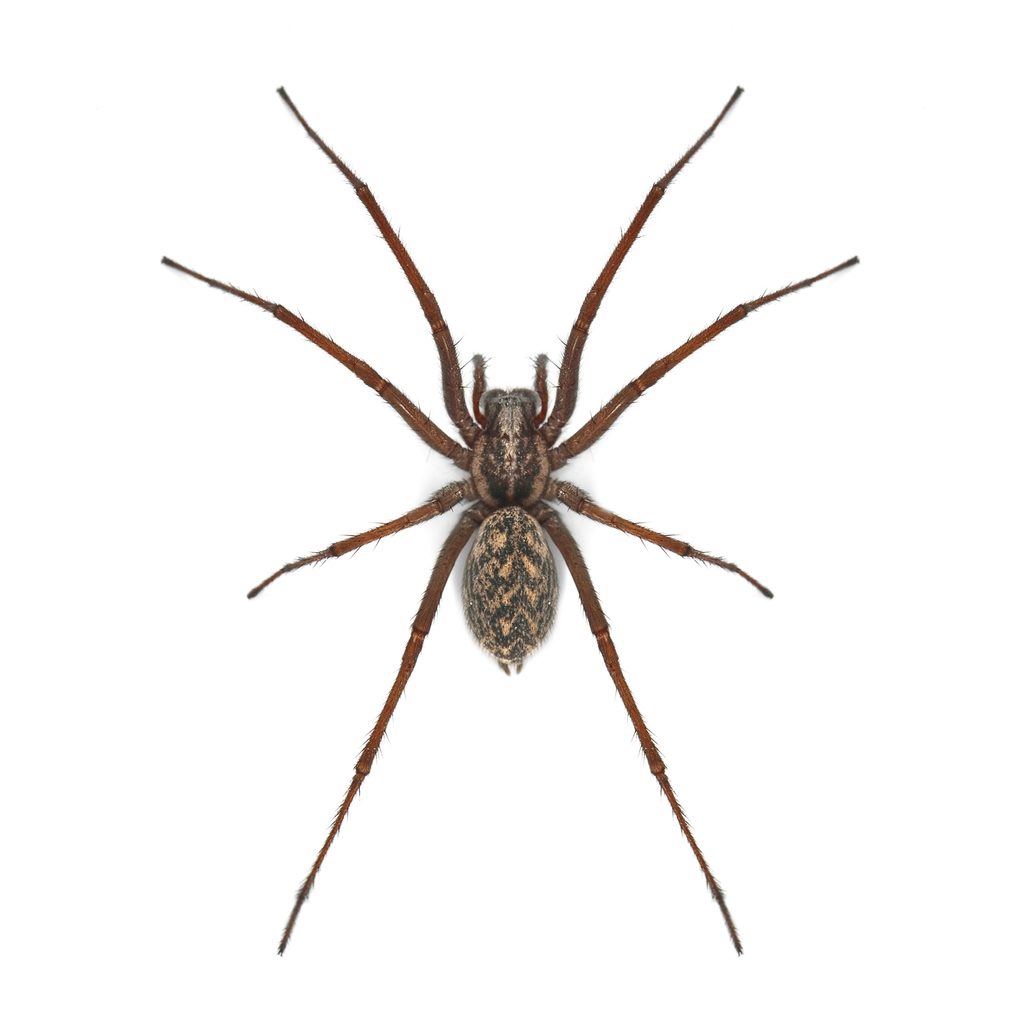
Smaller cousin of the giant house spider. Body up to 12mm, similar mottled brown-grey colouring, similar funnel webs. Lives happily in bathrooms, cellars, garages and behind stored furniture year-round. Also completely harmless.
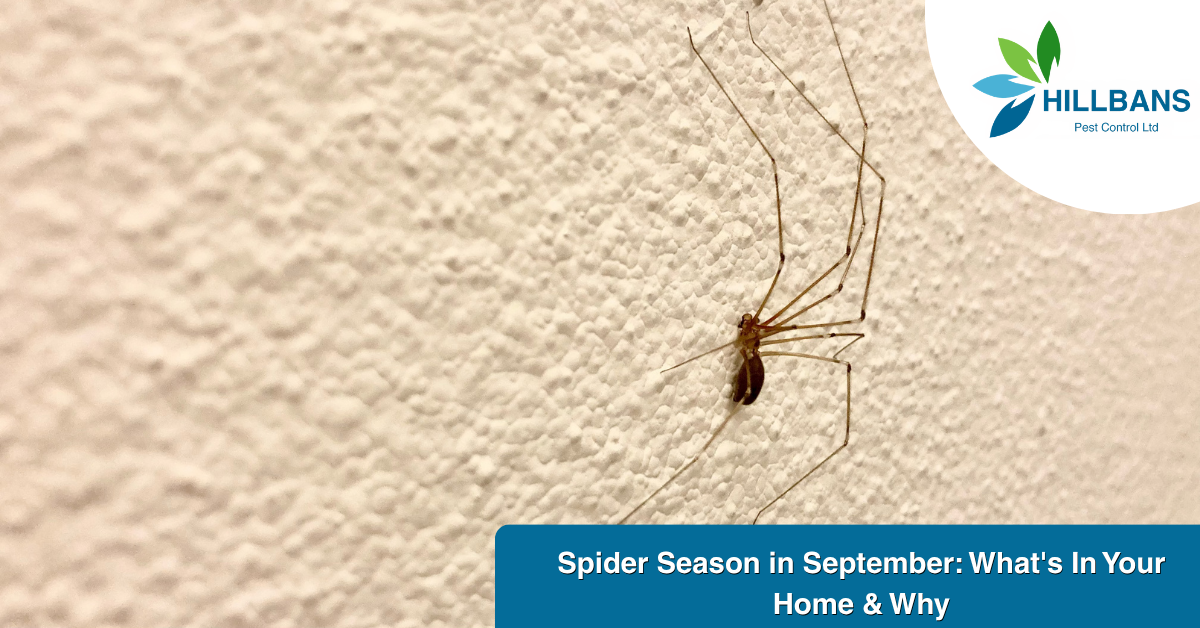
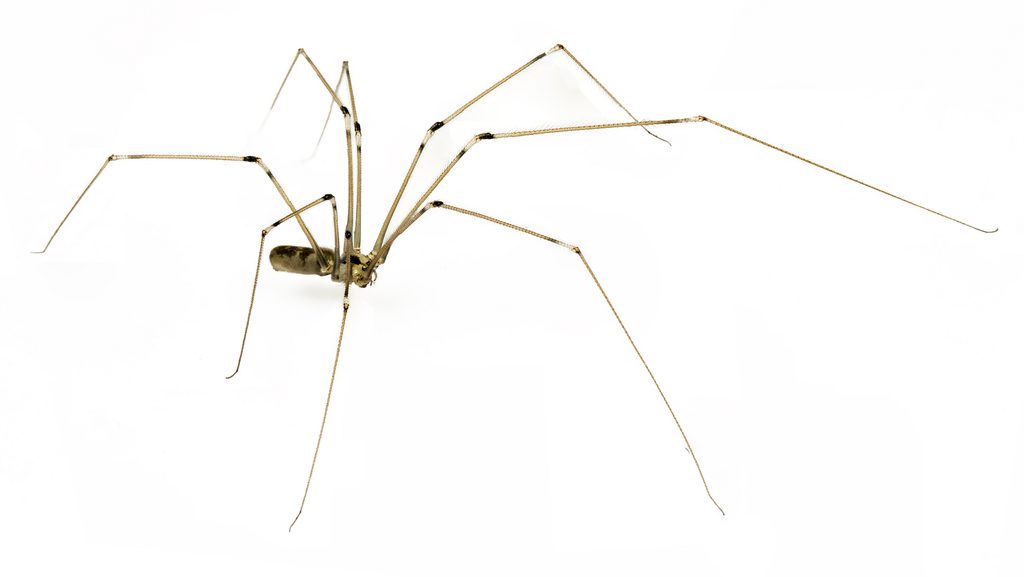
Small body, extremely long spindly legs, hangs upside down in messy webs in ceiling corners, under stair voids and in cupboards. Confusingly also called the daddy long-legs spider despite having nothing to do with actual daddy long-legs (which are craneflies). The persistent myth that it’s the most venomous spider in the world with fangs too small to bite humans is complete nonsense. It is harmless. It’s also a useful spider as it preys on other spiders including giant house spiders, so tolerating a few in the corners of the ceiling can reduce the number of larger ones you see.
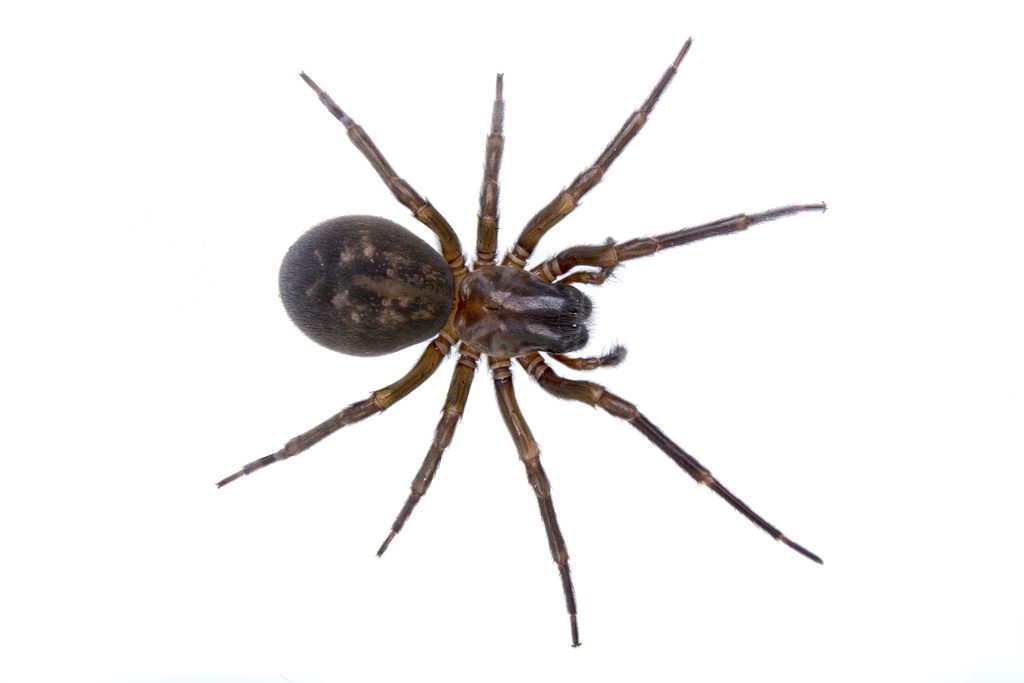
This is the one that generates all the tabloid coverage. Body up to 14mm, shiny brown-black bulbous abdomen often with cream or beige markings that some describe as skull-shaped. Reddish-brown legs. Builds tangled cobweb-style webs in sheltered outdoor and semi-outdoor spots. Located in sheds, porches, garden walls, window frames, under garden furniture. Present on the Isle of Wight and increasing in numbers slowly year on year.
The honest position on false widows: they are the only UK spider whose bite is medically noteworthy, but the risk is very small. Bites are rare the spider is not aggressive and only bites if squeezed or trapped against skin. Most bites resolve within a day or two with symptoms similar to a wasp sting: local pain, swelling, occasional redness.
A small proportion of people experience more significant reactions and should seek medical advice if symptoms escalate. The tabloid horror stories are almost invariably either misidentified spiders, secondary bacterial infections, or wildly overstated cases. That said, if you find false widows inside your home in significant numbers, professional control is entirely reasonable.
For most homeowners, a few large house spiders in September is nothing to worry about. Live and let live is entirely valid. However, professional spider control is worth considering in the following situations.
Whether or not you decide to have professional treatment, the following measures noticeably reduce the number of spiders you’ll see indoors.