
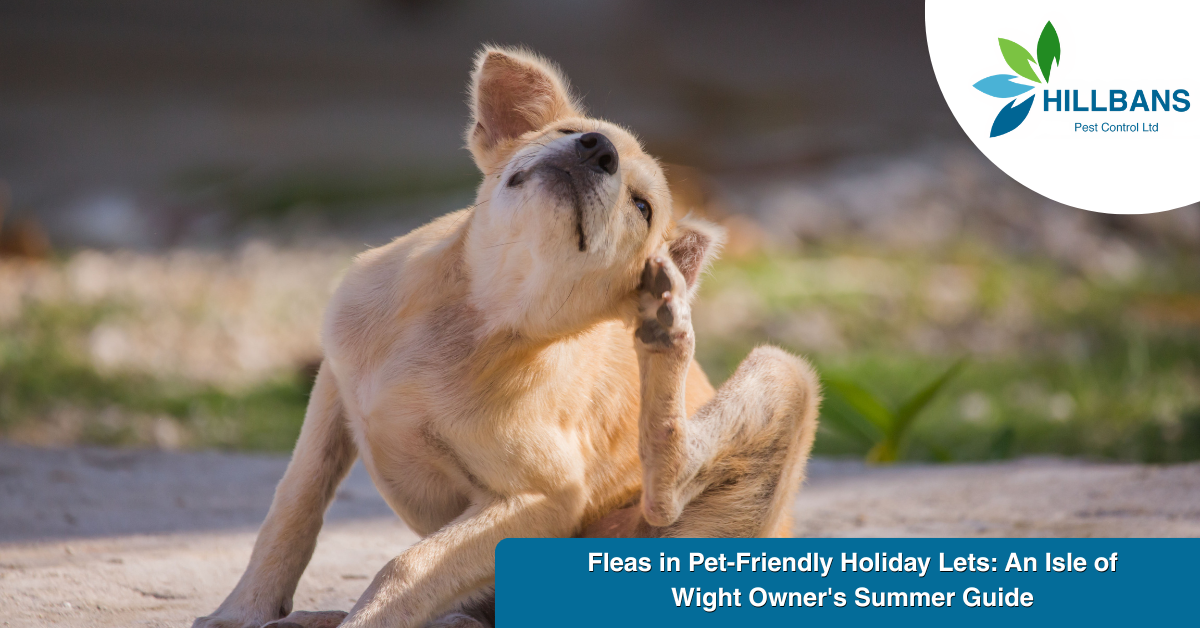
Fleas in holiday lets – Pet-friendly holiday accommodation is one of the strongest growth segments in Isle of Wight tourism. Dog-welcoming cottages, glamping sites, B&Bs and self-catering properties consistently command higher occupancy, longer average stays and stronger off-season bookings than their pet-free counterparts. The trade-off is real but manageable: every pet that comes through your door is a potential flea introduction event, and the Isle of Wight’s mild maritime climate combined with the warmth of late spring and early summer makes June the start of the most challenging few months of the year for accommodation owners.
For every adult flea you can see, there are typically 95 eggs, larvae and pupae hidden in carpets, soft furnishings, pet bedding and floor cracks. Standard hoovering between guests removes a fraction of them. The pupae stage is essentially indestructible to ordinary cleaning and can lie dormant for months waiting for a warm host to walk past. This is why a property can appear clean and still produce a flea infestation two weeks into a stay.
Cat fleas (Ctenocephalides felis) which despite the name are the dominant flea on UK dogs as well as cats — thrive at temperatures between 18 and 27 degrees Celsius and at humidity above 70 percent. Although some species have specific fleas unique to them, 99% of flea infestations are caused by cat fleas. The Isle of Wight reaches both reliably from mid-June onwards, and the maritime air keeps indoor humidity comfortably in the flea-friendly range right through to October.
Three things converge in June:
By the time you’re seeing live fleas on a guest’s dog at check-out, you’ve usually had a hidden problem for two to four weeks already.
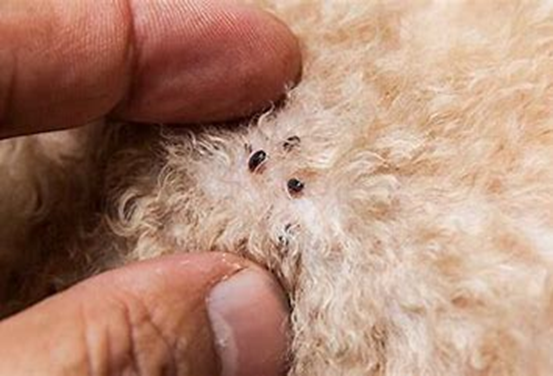
Fleas have a four-stage lifecycle, and understanding it is the single most important thing for any pet-friendly accommodation owner.
Smooth, white, around 0.5mm. Laid on the host but fall off into bedding, carpets, sofa cushions, dog beds and floor cracks within hours. Hatch in two to ten days.
Tiny, worm-like, blind. Hide deep in carpet pile, under furniture, in skirting board gaps and between floorboards. Feed on organic debris and adult flea droppings. Take five to eleven days to develop.
This is the stage that defeats most attempts at cleaning. The larvae spin a sticky cocoon that adheres to whatever they’re sitting on carpet fibres, fabric, dust, wood. The cocoon is virtually impossible to remove by vacuuming and is largely impervious to ordinary insecticides. Pupae can lie dormant for weeks or even months, waiting for vibration, body heat and exhaled CO₂ to signal that a host is nearby. This is why a property that has been empty for a fortnight can suddenly produce a flea problem within an hour of new guests arriving.
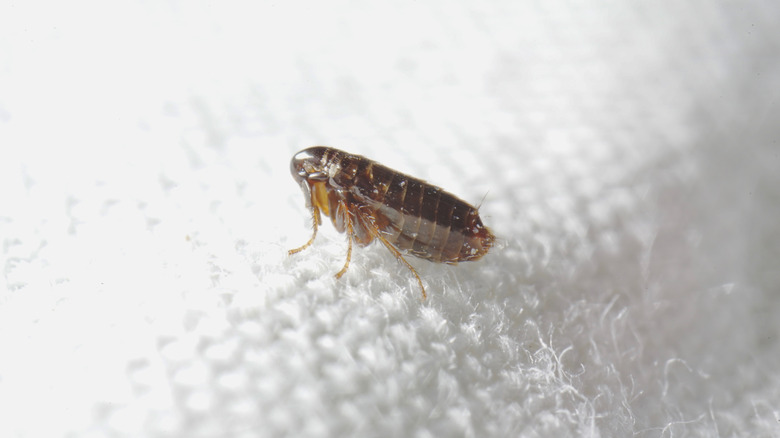
The fleas you can see. Live two to three months, feed multiple times a day, lay eggs continuously. Killing the adults you can see is the easy part and on its own, achieves very little.
This is the central insight: only about 5 percent of a flea population is visible at any one time. Standard cleaning removes adults and some eggs. The 30-plus percent of the population sitting as protected pupae in your carpets is exactly what causes infestations to recur a few days after you thought they were cleared.
Most flea problems are discovered by guests, which is precisely the situation you want to avoid. The following signs let you spot trouble before they do.
A thorough changeover clean hoovering, mopping, changing all bedding, wiping surfaces is essential, but it does not remove a flea infestation. Several reasons.
Our flea treatment protocol for holiday lets and pet-friendly accommodation is designed around two priorities: complete elimination, and minimum disruption to your booking calendar.
A technician inspects the property to identify infestation severity, confirm species, identify hotspots, and check for any underlying contributing factors such as wildlife access points or subfloor voids that may be harbouring populations.
We provide a clear preparation instructions. Typically this involves a thorough hoover throughout, washing all bedding and soft furnishings at 60°C or above, lifting cushions and rugs, and ensuring all people and pets are off the premises for the duration of treatment plus a few hours afterwards.
We apply a professional residual insecticide treatment to all rooms including carpets, soft furnishings, beneath furniture, along skirting boards and at all flea harbourage points.
After treatment, vibration encourages pupae to emerge so they encounter the residual treatment. We advise no hoovering for a fortnight following treatment and using the property as normal walking around the floors actually accelerates final clearance rather than slowing it.
For all customers we provide a treatment written report once treatment is completed.
Prevention is significantly cheaper and less disruptive than treatment. The following measures, implemented properly, dramatically reduce the chance of an infestation taking hold.
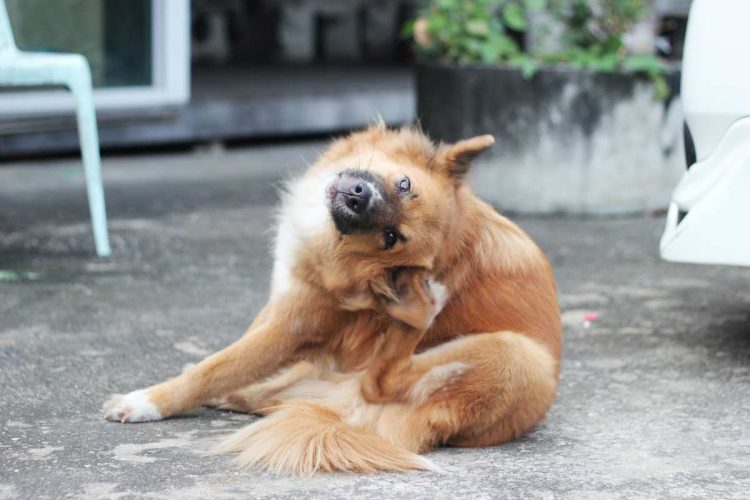
If a guest reports fleas, if your cleaning team have been bitten, or if you have a back-to-back pet booking calendar and want a preventative treatment in place before the summer peak, the right move is to act before the next changeover.
Need a flea treatment before your next guest arrives? Call Hillbans Pest Control on 01983 406999 or email info@hillbanspestcontrol.co.uk. Same-week service available across the Isle of Wight, planned around your changeover schedule.
